Key Takeaways
- Malpractice occurs when a provider fails to meet the accepted standard of care, such as delaying an emergency C-section during fetal distress or misusing surgical instruments.
- Common injuries linked to C-section errors include oxygen deprivation, surgical lacerations, brain injury, and nerve damage affecting the brachial plexus.
- The cesarean delivery rate reached 32.4% of all U.S. births in 2024, according to the CDC, meaning millions of families face these surgical risks each year.
- A successful claim requires proving duty, breach, causation, and damages, with causation typically the most contested element.
- In Indiana, a child injured at birth generally has until their eighth birthday to file a claim, while parents pursuing their own related injuries face a two-year window.
A cesarean section is often performed to protect both mother and baby when vaginal delivery poses a risk. But when a C-section goes wrong because of a surgeon’s error, poor monitoring, or a failure to act in time, the consequences for a newborn can be severe and permanent. Families in this position are left searching for answers, and many do not realize that what happened to their child may constitute medical malpractice.
At Wagner Reese, we handle birth injury and medical malpractice cases across Indiana and understand what it takes to hold negligent providers accountable. If your newborn was injured during a C-section, you may have the right to pursue a legal claim. Understanding how these cases work is the first step toward making an informed decision for your family.
What Makes a C-Section Injury a Malpractice Case?
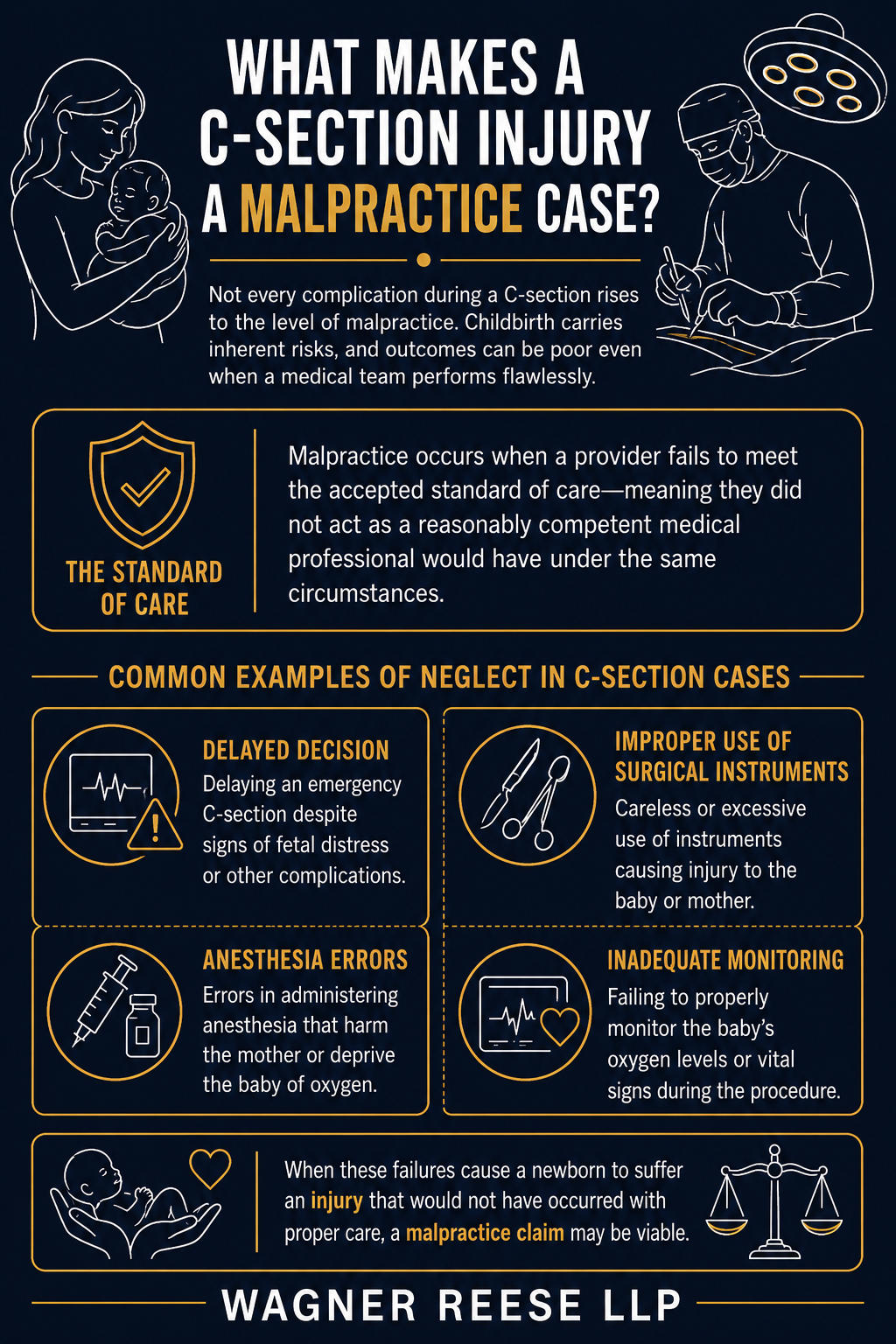
Not every complication during a C-section rises to the level of malpractice. Childbirth carries inherent risks, and outcomes can be poor even when a medical team performs flawlessly. Malpractice occurs when a provider fails to meet the accepted standard of care, meaning they did not act as a reasonably competent medical professional would have under the same circumstances.
In C-section cases, actionable negligence typically involves a failure at a specific point in the procedure. Common examples include a delayed decision to perform an emergency C-section when fetal distress is present, improper use of surgical instruments, errors in anesthesia administration, or inadequate monitoring of the baby’s oxygen levels. When those failures cause a newborn to suffer an injury that would not have occurred with proper care, a malpractice claim may be viable.
Common Injuries Linked to C-Section Negligence
According to the CDC, the cesarean delivery rate in the United States reached 32.4% of all births in 2024, meaning millions of deliveries each year carry the risks that come with surgical birth. When those risks materialize due to negligence rather than unavoidable circumstances, newborns can suffer a range of serious injuries.
The following are some of the injuries most commonly associated with C-section errors:
- Oxygen deprivation injuries: Failure to deliver promptly when fetal distress is detected can starve the baby’s brain of oxygen, leading to conditions such as hypoxic-ischemic encephalopathy or cerebral palsy.
- Surgical lacerations: A newborn can be cut by a scalpel during the incision, causing wounds that may require additional procedures and leave lasting damage.
- Infant brain injuries: Prolonged oxygen loss or trauma during extraction can result in permanent neurological harm.
- Nerve damage: Improper positioning or extraction techniques can injure the brachial plexus or other nerves, impairing movement and long-term function.
- Medication errors: Incorrect anesthesia dosing or the use of contraindicated drugs during surgery can harm the newborn directly.
Each of these outcomes deserves a thorough review by an attorney familiar with how delivery room errors translate into legal liability.
Proving Negligence in a C-Section Malpractice Claim
Building a malpractice case after a C-section injury requires more than showing a bad outcome. Four legal elements must be demonstrated to succeed: a duty of care owed by the provider, a breach of that duty, causation linking the breach to the injury, and measurable damages suffered by the child.
The most contested element is typically causation. Defense attorneys for hospitals and physicians will argue that the baby’s injury was caused by a pre-existing condition, an unavoidable complication, or maternal factors rather than the provider’s actions. An experienced legal team will work with qualified medical witnesses to counter those arguments and establish a clear connection between the negligence and the harm the child suffered.
The Role of Medical Records
Medical records are central to every OB-GYN malpractice claim. The surgical notes, fetal monitoring strips, nursing records, anesthesia logs, and post-operative documentation all tell a story. Inconsistencies, gaps, or documentation that contradicts the timeline of events can be powerful evidence supporting a family’s claim. Acting quickly to preserve those records helps build a strong case.
Indiana’s Statute of Limitations for Birth Injury Claims
Indiana has specific deadlines for filing medical malpractice claims, and birth injury cases have their own rules. Under Indiana law, a child injured at birth generally has until their eighth birthday to file a claim. However, adult claimants, such as parents filing on their own behalf for related injuries, face a two-year window from the date of the incident.
Indiana also requires that malpractice claims against healthcare providers be reviewed by a medical review panel before a lawsuit can proceed in court. This process adds time to the overall timeline, so families should consult with an attorney as soon as possible after identifying a potential claim. Waiting too long can complicate the process and limit available options.
Contact Wagner Reese LLP About Your C-Section Birth Injury Case
When a newborn is harmed because a medical team failed to meet the standard of care during a C-section, families deserve to understand their rights. Wagner Reese LLP brings more than 150 combined years of experience to birth injury cases throughout Indiana. Our founding partners have earned Trial Lawyer of the Year recognition, and our firm holds Tier-One Best Law Firm rankings, as well as recognition from both Super Lawyers and Best Lawyers in America.
We take these cases on a contingency fee basis, meaning there is no upfront cost to your family. If you believe your newborn was injured due to a C-section error, reach out to our team through our online contact form to get started.