Key Takeaways
- Tesla uses cameras and neural networks for driver-assist features, continuously improving its Full Self-Driving software.
- Waymo combines LiDAR, radar, and AI to provide fully autonomous ride-hailing and self-driving trucking services.
- Cruise develops all-electric autonomous vehicles for urban environments, offering limited driverless ride-hailing in cities like San Francisco.
- Zoox creates purpose-built driverless vehicles with bidirectional design and advanced sensors for safe, efficient urban mobility.
- NVIDIA provides AI computing and deep learning solutions that allow automakers to process sensor data in real time, enhancing autonomous vehicle safety and decision-making.
The autonomous vehicle (AV) industry is rapidly evolving, with several U.S. companies leading advancements in self-driving technology. Autonomous vehicle manufacturers focus on developing cutting-edge artificial intelligence, sensor technology, and real-world testing to make fully autonomous vehicles a reality.
If you or someone you love has been injured in an autonomous vehicle accident, you should get representation from top-rated Indiana car accident lawyers to recover the highest possible compensation for your injuries and losses.
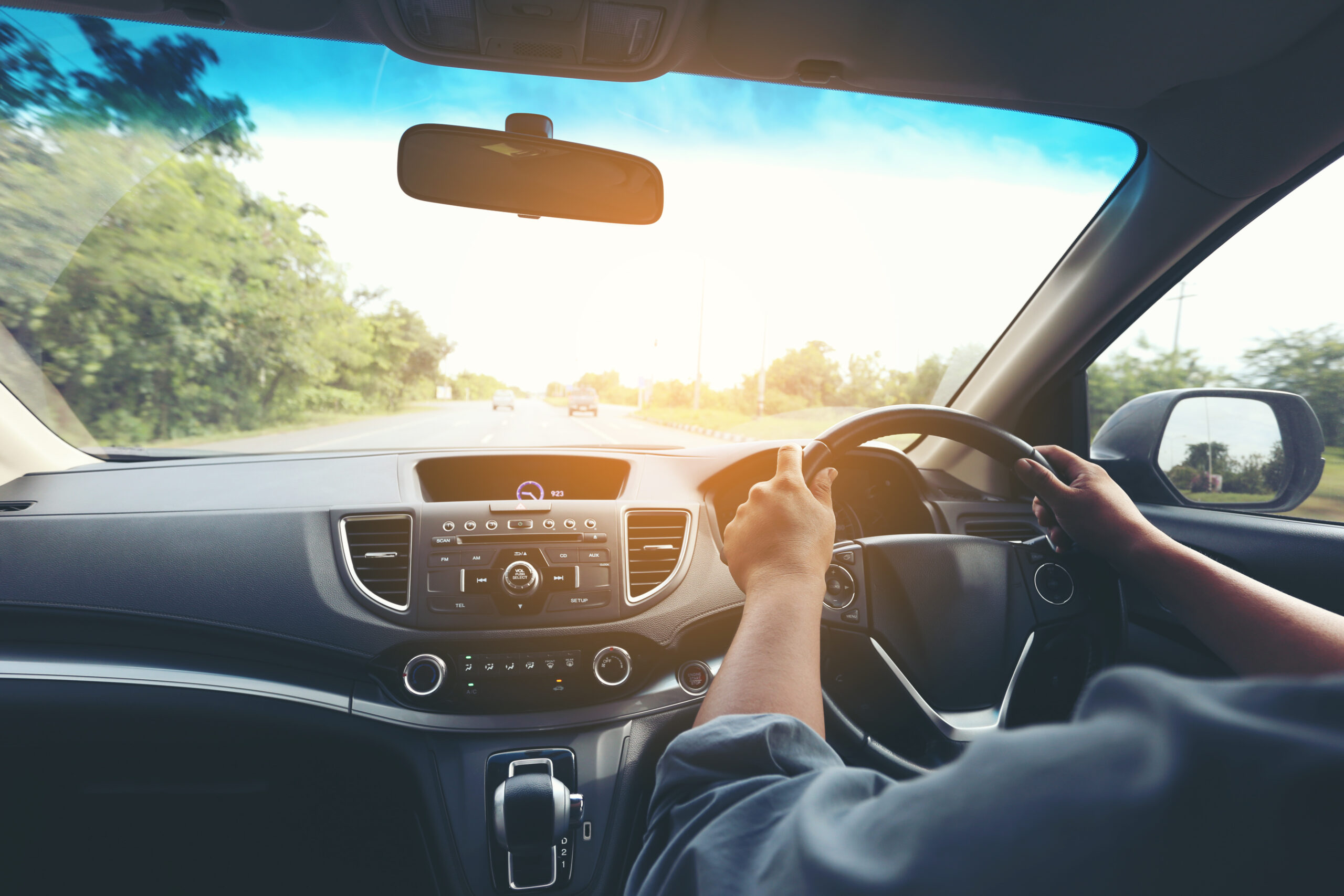
Leading Self-Driving Car Providers in the U.S.
Tesla
Tesla is one of the top self-driving car companies in the world. It has integrated its Full Self-Driving (FSD) software into its electric vehicle lineup, aiming to create fully autonomous cars through a vision-based AI approach. Unlike other companies that rely on LiDAR, Tesla uses an extensive network of cameras and neural networks to analyze real-time road conditions.
Tesla’s Autopilot and FSD Beta systems currently offer driver-assist features such as automatic lane changes, adaptive cruise control, and limited hands-free navigation in controlled environments. While Tesla vehicles aren’t yet fully autonomous, the company is continuously refining its AI algorithms and collecting data from millions of cars worldwide to improve safety and decision-making.
Waymo (Alphabet Inc.)
Waymo—a subsidiary of Google’s parent company Alphabet—is a global leader in autonomous vehicle technology. The company began as Google’s self-driving car project in 2009 and has since logged over 20 million miles of real-world driving. Waymo’s vehicles use a combination of LiDAR, radar, cameras, and deep learning to interpret and navigate complex urban environments.
Waymo has launched commercial autonomous ride-hailing services, called Waymo One, in cities like Phoenix and San Francisco, providing fully driverless rides to the public. The company also operates Waymo Via, a self-driving trucking division aimed at revolutionizing freight transportation.
Cruise (General Motors)
Cruise, a subsidiary of General Motors (GM), focuses on developing all-electric, self-driving vehicles for urban environments. Cruise’s autonomous fleet is powered by AI-driven software, high-resolution mapping, and extensive real-world testing.
Cruise has deployed self-driving cars in San Francisco, offering limited public ride-hailing services with no human drivers on board. The company also aims to expand its autonomous vehicle operations in multiple cities. GM has heavily invested in Cruise, recognizing its potential to revolutionize urban transportation and reduce reliance on human-operated vehicles.
Zoox (Amazon)
Amazon-owned Zoox is designing fully autonomous, purpose-built vehicles for ride-hailing services. Unlike traditional self-driving car retrofits, Zoox vehicles are engineered from the ground up to be driverless, featuring a unique bidirectional design that allows them to move forward or backward without turning around.
Zoox vehicles are equipped with a sophisticated sensor suite, including LiDAR, radar, and AI-powered object recognition. The company is currently conducting real-world testing and plans to roll out an autonomous ride-hailing network. With Amazon’s backing, Zoox aims to revolutionize urban transportation with safe, efficient, and sustainable autonomous mobility solutions.
NVIDIA
Although NVIDIA does not manufacture self-driving cars, it’s a crucial player in the AV industry by providing AI-powered computing solutions for autonomous vehicles. NVIDIA’s DRIVE platform offers end-to-end solutions for self-driving technology, including real-time data processing, AI decision-making, and deep learning for object detection.
Major automakers, including Mercedes-Benz, Volvo, and Jaguar Land Rover, rely on NVIDIA’s technology to enhance their autonomous driving capabilities. NVIDIA’s powerful GPUs and AI accelerators allow self-driving cars to process massive amounts of sensor data in real time, improving their ability to detect obstacles, pedestrians, and other vehicles.
Self-driving vehicle accident claims move fast — talk to someone before you talk to the manufacturer’s insurer.
Wagner Reese has handled Indiana injury claims for nearly three decades. A free case review takes minutes and costs nothing to find out where you stand.
| ~30 yrsserving injured Hoosiers | $0fee unless we win | 24/7free case review |
Get My Free Case Reviewor call (888) 204-8440
No fee unless we recover compensation for you.
How Our Indiana Self-Driving Car Accident Lawyers Identify the Liable Parties and Prove Fault
Self-driving car accidents present unique legal challenges as multiple parties may share liability. At Wagner Reese, LLP, our experienced Indiana self-driving car accident lawyers conduct thorough investigations to identify all responsible parties and prove their negligence.
- The Autonomous Vehicle Manufacturer: If a design flaw, software glitch, or faulty sensors contributed to the crash, the self-driving car manufacturer may be liable under product liability laws. Defects in the vehicle’s AI decision-making system, braking, or collision-avoidance features can make the manufacturer responsible for injuries.
- Software and AI Developers: Autonomous vehicles rely on complex artificial intelligence systems. If coding errors, inadequate updates, or cybersecurity vulnerabilities lead to an accident, the software provider may be held accountable.
- The Human Operator (If Applicable): Some self-driving vehicles still require human supervision. If the safety driver fails to take corrective action in an emergency, they could be liable for the crash.
- The Vehicle’s Owner: If the autonomous vehicle was improperly maintained, the owner may be responsible for negligence in failing to repair defective components.
- Third-Party Drivers: If another motorist’s reckless actions or traffic violations contributed to the accident, they could share liability.
Our Indiana self-driving car accident attorneys at Wagner Reese, LLP will aggressively pursue maximum compensation by identifying all liable parties and holding them accountable for your injuries and losses. To schedule your free consultation, call us at (888) 204-8440 or contact us online.