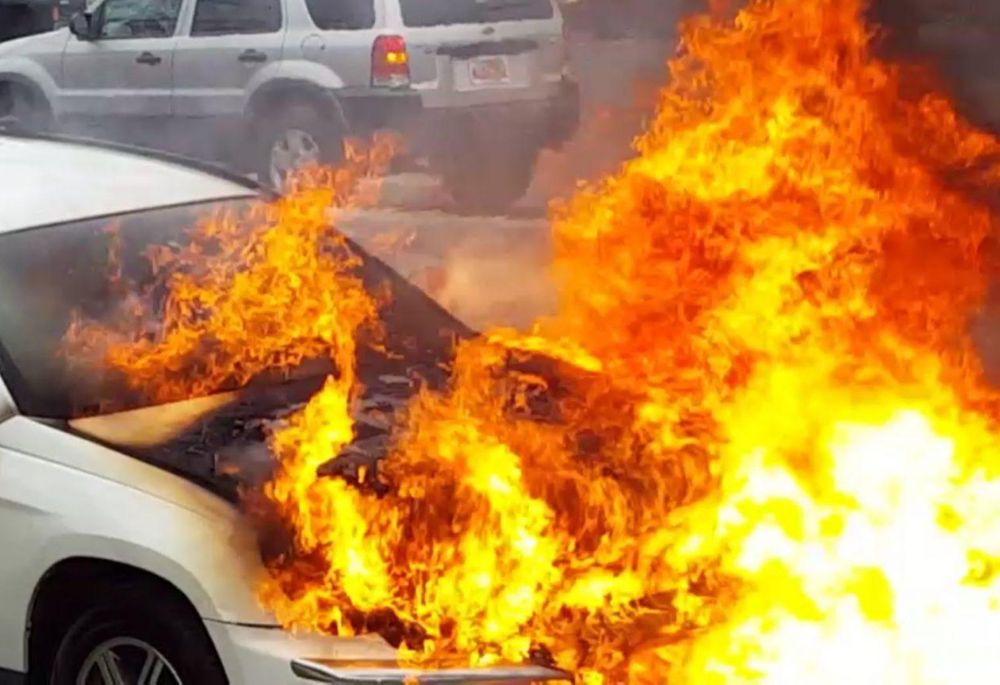
After a crash, it’s usually best to stay in your vehicle while you wait for help to arrive. However, there’s one major exception to that wisdom: a car fire. If your car catches fire, or if you see danger signs that indicate it may soon ignite—such as smoke or the smell of fuel—ensuring that you and your passengers exit the vehicle as quickly as possible can save your life. Highway vehicle fires are often linked to motor vehicle crashes or issues with fuel or oil levels, which can increase the fire risk significantly.
In the event of a vehicle crash or fire, having a fire extinguisher on hand can help control flames until emergency responders or volunteer firefighters arrive. It’s essential to pay attention to the fuel tank condition and maintain your passenger vehicles to prevent such hazards.
In this blog, we’ll discuss what causes vehicle fires, how to recognize the signs that your car is at risk of catching fire, and what to do if you see smoke or flames emanating from underneath your vehicle’s hood or chassis.

How Vehicle Fires Happen
Vehicle fires can happen quicker and more often than most people think. In fact, the National Fire Protection Association (NFPA) says fire departments nationwide responded to an average of one highway vehicle fire every two minutes and 47 seconds in 2022.
Following the rules of the road and keeping up with regular maintenance can help reduce your vehicle’s chances of catching fire. In addition, the U.S. Fire Administration has put together a list of tips to help prevent a vehicle fire from happening.
- If you smell burning plastic or rubber, pull over safely and investigate. Don’t try to make it home before you determine what the trouble is.
- Get in the habit of having your car checked out at least once a year. An inspection should include examining the vehicle for gas or oil leaks. If you suspect a leak, place a newspaper under your vehicle at night and weigh it down with a heavy object; in the morning, check the paper for stains.
- If a fuse keeps blowing, that’s a sign of electrical trouble. Don’t let it keep happening without investigating, as an overloaded wire can be the source of a fire.
Quick Thinking Can Save Lives During Vehicle Fires
Vehicle fires can become deadly in a matter of minutes or even seconds. When a car catches fire, occupants can quickly be overwhelmed by burning rubber, intense heat, and smoke before they have a chance to exit. Fires caused by lithium-ion batteries, mechanical failure, or electrical problems can create especially hazardous conditions, requiring swift action from volunteer firefighters and fire apparatus to control the flames.
In some cases, engine temperature spikes or a loose oil cap can trigger a fire inside the engine compartment. If your car catches fire due to an electrical fault or mechanical failure, it’s essential to pull over and exit immediately to avoid injuries and property damage.
In August 2017, a car fire put the lives of 16 students and the driver at risk in DeKalb County, Indiana, when a school bus became engulfed in flames while picking up students in a residential area before school. Thankfully, emergency calls were made promptly, and other vehicles in the vicinity avoided further catastrophe.
Regular maintenance, such as getting your car checked, can prevent issues related to electrical faults and engine fires. The vast majority of these incidents could be avoided with routine care, but in case of an emergency, understanding occupational safety measures and having a plan can help save lives.
According to WANE, the bus driver quickly determined that something was not right shortly after the bus caught fire. The driver stopped and evacuated the students from the bus after spotting smoke coming from under its front hood.
When firefighters arrived, they found the bus’s engine compartment and driver’s area engulfed by flames. The fire’s cause wasn’t immediately evident. Students were able to exit the bus safely before being checked out by medics and released with no injuries.
What to Do If Your Vehicle Catches Fire
If the unthinkable happens and your car catches fire while you are driving, the most important thing to do is to remain calm. Then follow these steps, which also apply if your car ignites while it’s parked in your driveway, stopped on the roadway, or waiting in a parking lot.
- Signal and move immediately to the right shoulder, or right lane.
- Get the vehicle stopped and shut off the engine while getting yourself and all passengers out of the vehicle.
- Get as far away from the vehicle as you can (at least 150 feet), but make sure the area you move to is safe and secure.
- Dial 911 so the dispatcher can notify the fire department.
- Warn onlookers and others to keep away. If you have a signaling device, you can also attempt to warn oncoming drivers. Do not go back to your smoking or burning vehicle to retrieve first aid, flares, cones, or other road safety instruments.
Our Indiana Car Accident Lawyers Are Here to Help You
Car accidents happen on roadways across America each and every day, and sadly, some can result in deadly fires. In addition to fatalities, there are thousands of serious injuries that change the lives of crash victims every year.
At Wagner Reese, our attorneys have decades of experience working for victims of car and truck accidents, and our results are indicative of the determination and care we put into each case we build on behalf of our clients. If you or someone you care about has been injured in a car accident, call us today for a free consultation.
Originally published August 1, 2017.