
Key Takeaways
- Placental abruption, the premature separation of the placenta from the uterine wall, affects roughly 0.4-1.0% of pregnancies and can progress rapidly into a life-threatening emergency for mother and baby.
- Warning signs providers are trained to watch for include vaginal bleeding, sudden abdominal pain, uterine tenderness, and abnormal fetal heart rate patterns.
- Common failures that can rise to medical malpractice include missed fetal monitoring, misread or dismissed imaging, disregarded symptoms, and delayed emergency delivery.
- Untreated abruption can lead to severe maternal hemorrhage or organ failure, and for the baby, oxygen deprivation, hypoxic brain injury, or cerebral palsy.
- Indiana law allows families to pursue compensation for medical expenses, lost income, pain and suffering, and long-term care costs, and in the most severe cases, a wrongful death claim.
When a placenta separates from the uterine wall before delivery, the window to protect both mother and baby can close within minutes. Placental abruption is one of the most serious obstetric emergencies medical professionals are trained to recognize and address, and when they fall short, the harm to a family can be permanent. Understanding what went wrong and who is responsible is the first step toward getting the answers you deserve.
At Wagner Reese, we represent Indiana families whose lives were changed by preventable medical negligence during pregnancy and childbirth. Our attorneys have over 150 years of combined experience handling complex cases, and our firm holds a Tier-One Best Lawyers Law Firm designation and consistent recognition from Super Lawyers. If your doctor missed the signs of placental abruption, we are here to help you understand your legal options.
What Placental Abruption Is and Why It Demands an Immediate Response
Placental abruption is the premature separation of the placenta from the uterine wall before a baby is born. According to the National Institutes of Health, it affects roughly 0.4% to 1.0% of all pregnancies and is a leading cause of serious bleeding in the second half of gestation, carrying significant risks of maternal hemorrhage, fetal compromise, and death. Physicians and hospital staff are trained to watch for warning signs, including vaginal bleeding, sudden abdominal pain, uterine tenderness, and changes in fetal heart rate patterns.
The danger with placental abruption lies in how fast it can progress. A mild separation may allow for careful monitoring, but a moderate or severe abruption requires urgent intervention to prevent oxygen deprivation for the baby and catastrophic blood loss for the mother. No obstetric provider should fail to recognize and act on these warning signs, and when they do, the consequences are often devastating.
When Doctors Fail to Recognize the Warning Signs
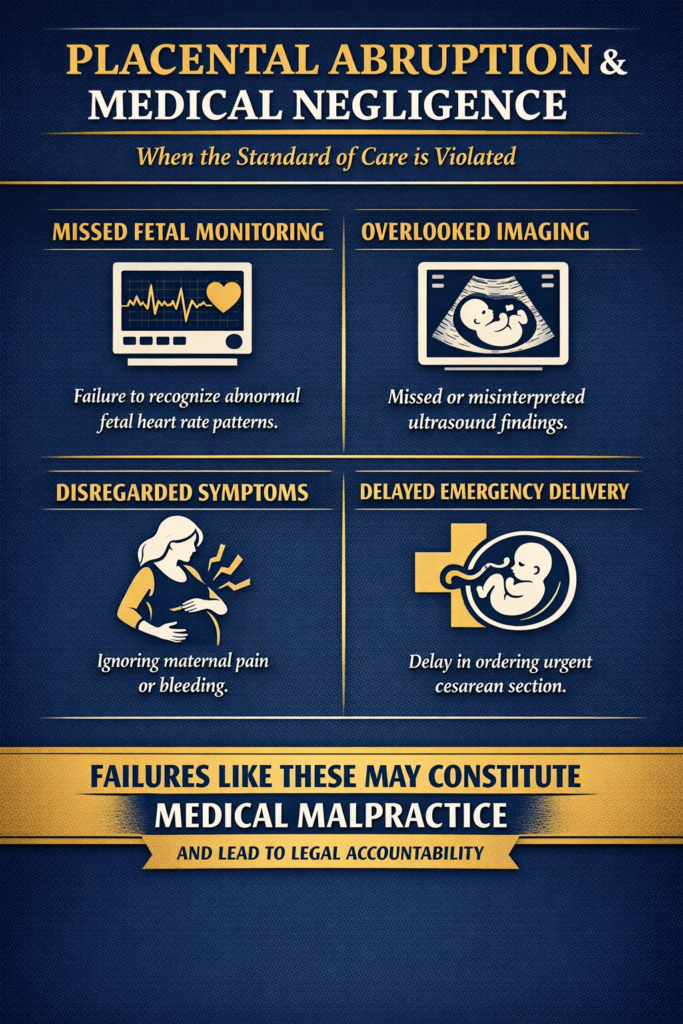
Medical professionals treating pregnant patients are held to an established standard of care. The following are examples of how that standard can be violated in placental abruption cases:
- Missed fetal monitoring: Abnormal fetal heart rate patterns are present in many abruption cases, yet providers sometimes fail to properly interpret or respond to this data
- Overlooked imaging: ultrasound findings consistent with abruption are sometimes misread or dismissed, delaying a diagnosis
- Disregarded symptoms: a patient’s reported pain, bleeding, or discomfort may be minimized or attributed to less serious causes
- Delayed emergency delivery: Failure to order a timely cesarean section when an abruption is severe can result in oxygen deprivation and permanent brain injury for the baby
Each of these failures can rise to the level of medical malpractice under Indiana law, and when they do, the providers involved may be held legally accountable.
The Consequences Families Face After a Missed Diagnosis
When a placental abruption is not caught or treated in time, both the mother and the baby can face life-altering outcomes. For mothers, the risks include severe hemorrhage, emergency hysterectomy, organ failure, and, in the most tragic cases, death. For babies, delayed intervention can lead to hypoxic brain injuries, cerebral palsy, and other permanent disabilities resulting from oxygen deprivation. A failure to diagnose in an obstetric setting is not just a clinical failure; it is a legal one with real consequences.
Indiana law allows families who suffered harm due to medical negligence to pursue compensation for medical expenses, lost income, pain and suffering, and the long-term cost of caring for a child with permanent disabilities. In the most heartbreaking cases, families may also have grounds for a wrongful death claim in Indianapolis. While no legal outcome can undo the trauma your family experienced, the right legal representation can help ensure accountability and provide the resources you need to move forward.
Contact Wagner Reese After a Placental Abruption Injury
Proving negligence in a birth injury case tied to prenatal complications requires both legal skill and a thorough understanding of obstetric medicine. Our team works with qualified medical experts to review your records, identify where the standard of care was breached, and build a case reflecting the true extent of your family’s loss. We handle the legal complexity so you can focus on what matters most.
Wagner Reese operates on a contingency fee basis, meaning you owe nothing unless we recover compensation for you. Our founding partners have each received Trial Lawyer of the Year honors and Top 50 recognition from respected legal organizations, and our attorneys are consistently listed in The Best Lawyers in America. If your family was harmed because a medical provider failed to recognize or respond to placental abruption, we encourage you to contact us so we can review your case.