
Key Takeaways
- Insurance companies aim to minimize payouts, often at the expense of accident victims.
- Most cases are resolved through negotiations, but insurers may only offer fair compensation if a strong attorney threatens litigation.
- Avoid negotiating directly with the at-fault driver’s insurer due to power imbalances, lack of knowledge, and risk of low settlements.
- Giving recorded statements or opinions without legal representation can be used against you and harm your claim.
- An experienced attorney handles negotiations, ensures proper documentation, and maximizes your compensation while protecting your legal rights.
Being hit by a negligent driver is stressful enough. What often catches people off guard is what comes next: dealing with the at-fault driver’s insurance company. From the moment you file a claim, that insurer’s primary goal is to pay out as little as possible, and they have experienced adjusters working toward that outcome from day one.
If you’ve been injured in a crash in Indiana, you don’t have to navigate this process alone. At Wagner Reese, we have helped injured Hoosiers navigate the insurance claims process for decades, fighting to ensure our clients aren’t shortchanged by companies that prioritize profits over people.
Understand What You’re Dealing With
When you file a claim with the at-fault driver’s insurer, you are dealing with their company, not yours. That distinction matters. The adjuster assigned to your case works for the at-fault driver’s insurance company, and their job is to close your claim for as little money as possible. Knowing this going in helps you approach every interaction strategically.
Insurance companies often move quickly after an accident. They may reach out within hours, hoping to get a recorded statement or push for a fast settlement before you fully understand the extent of your injuries. A quick settlement may sound appealing, but accepting one too soon can leave you with medical bills and lost income that far exceed what you received.
Do Not Give a Recorded Statement
One of the most important steps you can take is to decline giving a recorded statement to the at-fault driver’s insurance company. Adjusters are trained to ask questions designed to get you to downplay your injuries or assign yourself some portion of blame. Even an innocent-sounding comment like “I didn’t see it coming” can be used against your claim later.
You are not legally required to give a recorded statement to the other driver’s insurer. Politely declining is well within your rights. If you do speak with them, keep your answers brief, stick to confirmed facts, and avoid speculating about fault or the full severity of your injuries.
Document Everything
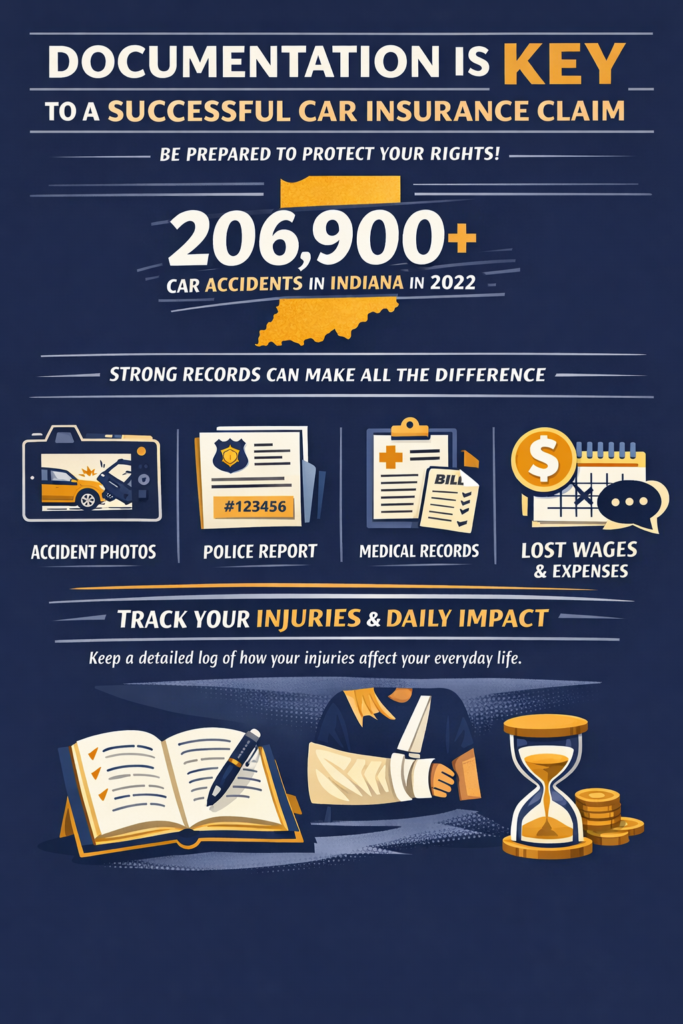
Strong documentation is the foundation of a solid insurance claim. According to the Indiana Criminal Justice Institute, Indiana recorded over 206,900 car accidents in 2022 alone, meaning insurers in this state process thousands of claims each year and have well-practiced strategies for minimizing payouts. Thorough records give you a real advantage.
Key items to gather and preserve include the following:
- Photos of the accident scene, vehicle damage, and any visible injuries
- The police report and case number
- Medical records, bills, and treatment notes from every provider you see
- Documentation of missed work and other related financial losses
- Names and contact information of any witnesses present at the scene
Keeping a running log of how your injuries affect your daily life also goes a long way when it comes time to discuss compensation for your car accident.
Do Not Accept the First Settlement Offer
Insurance companies routinely make low initial settlement offers, especially when they believe you don’t have legal representation. The first offer almost never reflects the true value of your claim. Medical treatment often continues for weeks or months after a crash, and accepting a settlement before you’ve reached maximum medical improvement may mean walking away with far less than your recovery requires.
Before agreeing to anything, speak with an attorney. Understanding how fault is determined in Indiana can also significantly affect your ability to negotiate, since Indiana follows a modified comparative fault rule that may reduce your recovery if you are assigned any share of blame.
Know That the Insurer May Be Watching
It may feel intrusive, but the at-fault driver’s insurance company may monitor your public social media accounts after an accident. A photo at a family event or a post about feeling better could be taken out of context to suggest your injuries aren’t as serious as claimed. It’s worth learning how insurance companies use social media to investigate injury claims and why limiting your online activity during this period is a smart move.
It’s also worth noting that if the at-fault driver is uninsured or underinsured, your own policy may be your primary source of recovery. Reviewing your uninsured motorist coverage with an attorney can help you understand all the options available to you.
Contact Wagner Reese LLP Before Talking to Insurance Companies After a Car Accident
Dealing with an insurance company after a car accident is not something you have to face alone. At Wagner Reese LLP, we bring more than 150 combined years of experience to every personal injury case we handle across Indiana. Our attorneys are continuously recognized by Super Lawyers and The Best Lawyers in America, and we hold Tier-One Best Lawyers Law Firm status year after year. We take cases on a contingency basis, meaning you pay nothing unless we recover for you.
If a negligent driver injured you, we’re ready to help you pursue the full compensation you deserve. Contact Wagner Reese today to schedule a free consultation.